Category: reviews

  • Beneath by Ariel Sullivan

    Beneath by Ariel Sullivan

    No spoiler overview

    Beneath has a classic dystopian setup. Humanity has been forced to live underground in “Haven” after a global nuclear war made life on the surface impossible. There’s a questionable governing body, morally grey characters, and twists that reveal layers you weren’t expecting to be there.

    This book is a prequel to Conform, set later when people can live on the surface again. Both books are sci-fi with romance, and both are the first of a trilogy set in their time period. Conform strongly reminded me of the Uglies books, where Beneath felt more like Hunger Games. If you loved those books, you’ll want to dive into this universe.

    While both books had exciting premises, I noticed improvement in the writing between the two. Conform was Ariel Sullivan’s debut work, and I felt it leaned into tropes, particularly romance tropes, more heavily. Beneath has stronger writing, where you can see Sullivan’s individual style starting to come through stronger. It still has the romance element, but it felt more natural, which I liked.

    Full review

    A porch with three rocking chairs, one of which has Beneath sitting on it

    There was a lot of thoughtful setup for Conform, while maintaining a strong individual story in Beneath. I can’t wait to see what happens with Sasha and the new challenges before her. She went through so much growth, but now she’s got a new set of problems to face for the rest of the series.

    I hope that we do eventually find out more about the war that made them all go down there in the first place, and the people who created Haven. There was a small mention that no one really knew who started it, and I’m wondering what the motive could’ve been. Then you also have to wonder why they would only include some of the supplies, hiding away a whole separate trove (that included TABITHA?? What is that about!).

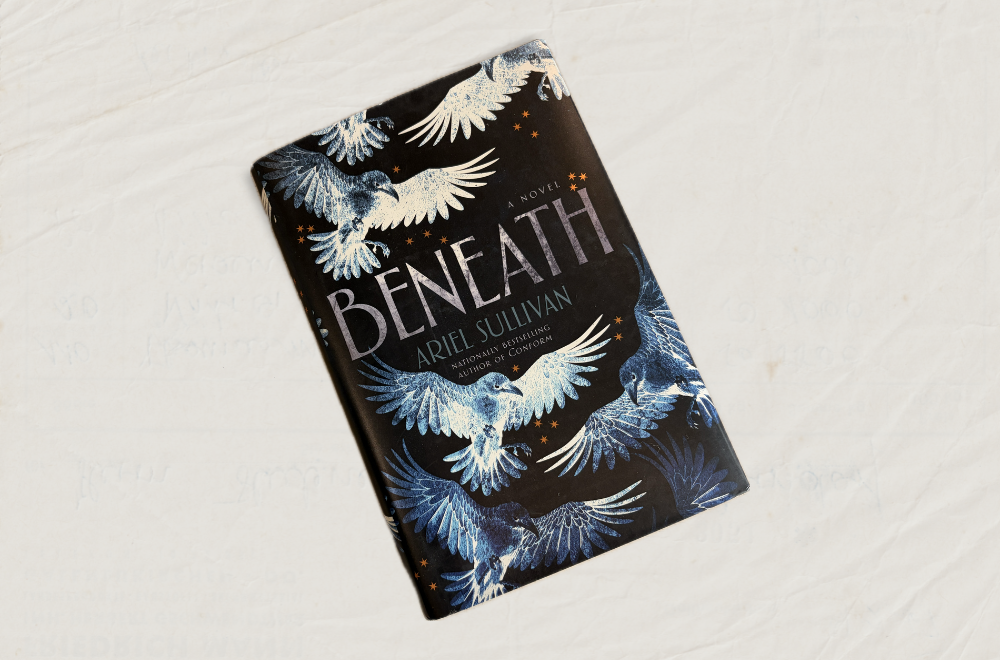
    I’m also very curious about the cover of this book and how it connects to the story. First, I think it’s a really beautiful cover. Second, I wonder if the ravens are tied to Levi’s call sign, Raven. It feels like a strange choice, when Sasha is clearly our main focus in this book. She has an equally beautiful call sign (Phoenix) that could have been used, without giving things away. The stars could be a nod to the comment Rumi made about how those who passed are looking down at them from the stars, which would feel really fitting. But the ravens… I can’t quite make sense of yet.

    Either way, I’m hooked. I can’t wait to see what comes next in this story, and how we end up with the society we see in Conform.


    Disclosure: I am an affiliate of Bookshop.org and I will earn a commission if you click through and make a purchase.
  • The Wager by David Grann

    The Wager by David Grann

    No spoiler overview

    I really don’t read that much nonfiction. The fact that both of my book clubs chose nonfiction books in the same month was a challenge. That’s how I ended up reading The Wager: A Tale of Shipwreck, Mutiny, and Murder; otherwise, I never would’ve picked it up.

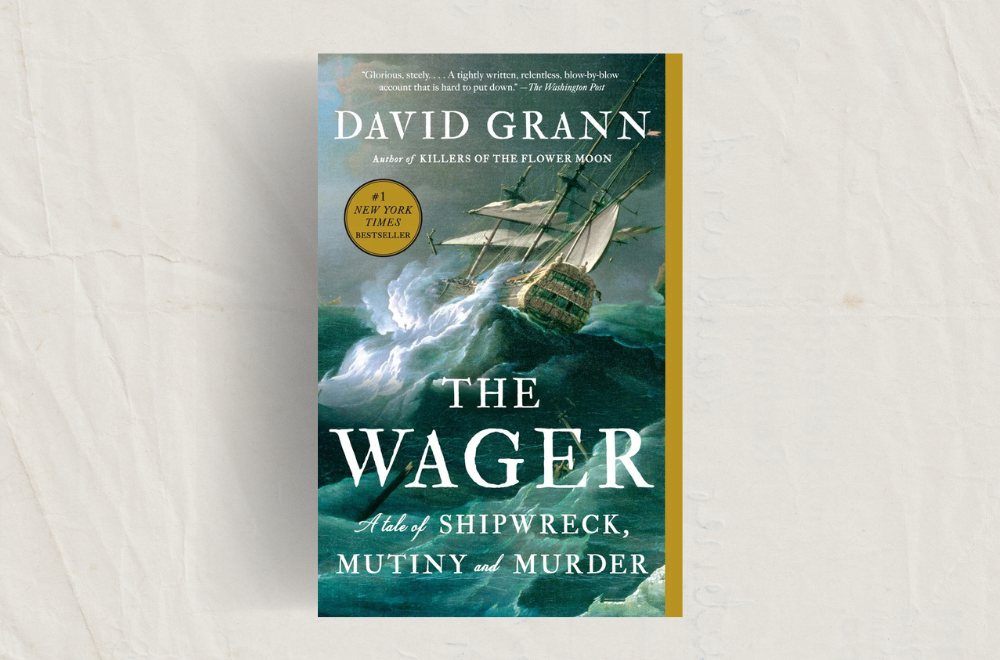
    We follow a fleet on a secret mission for the British Empire in an attempt to take down the Spanish. Unfortunately one ship, The Wager, got the shortest of all the sticks. When rounding Cape Horn to get to the Pacific Ocean, the ship takes a beating and loses the fleet. In the captain’s desperate attempt to rejoin them, they get stuck on an island off Patagonia. The crew quickly split into factions on the island, and tumble into depravity and despair. Miraculously, some of them make it back to England after many trials. Then the story shifts to he said, she said, ending in a court martial to determine their fate.

    The Wager covers a broad swath of topics. If you enjoy exploring the bounds of civilization, the effects of colonization, and who stands on the “right” side of history, you’ll likely enjoy this book. David Grann has figured out how to make nonfiction more compelling through his narrative style, making this book more approachable for those of us who don’t love nonfiction reading. It still was not my most favorite, but I didn’t dislike reading it as much as I thought I would.

    Full review

    Grann ends The Wager with a focus on who controlled the narrative of this story. Everyone who survived that shipwreck had a version of events that skewed things their way, painted them in the best light. In the last few pages, he makes the point that, in the end, almost everyone missed the bigger picture. While pointing the finger at each other, they completely miss that it was the British Empire that was to blame. They only got into this mess because of the empire trying to distract from a failing war, which started because they wanted to keep expanding trade routes. The narratives of the survivors didn’t matter in the end, because the empire covered everything up, rending their struggle for naught. It was ultimately their blind loyalty to the empire that was to blame.

    What’s interesting to me about this ending is that it felt out of left field when I was reading it. Not because it’s wrong, but because it’s such a shift from the majority of the book. Most of the book is retelling the events of The Wager in a very straightforward “this is what happened” style. The section that covers the warring narratives is relatively short in comparison, and again feels very straightforward. There was no question in my mind about the way the events went down. It was more about who was in the right. In the last chapter, Grann delves into the cruelty of the empire through slavery, treatment of indigenous people, war. The empire’s control of the narrative meant that all those cruelties could get hidden behind they “victory” of finding the Spanish treasure.

    It left me wondering, what is the point that Grann is trying to get across? What is his narrative of this story telling us about him?

    Disclosure: I am an affiliate of Bookshop.org and I will earn a commission if you click through and make a purchase.
  • Strangers by Belle Burden

    Strangers by Belle Burden

    No spoiler overview

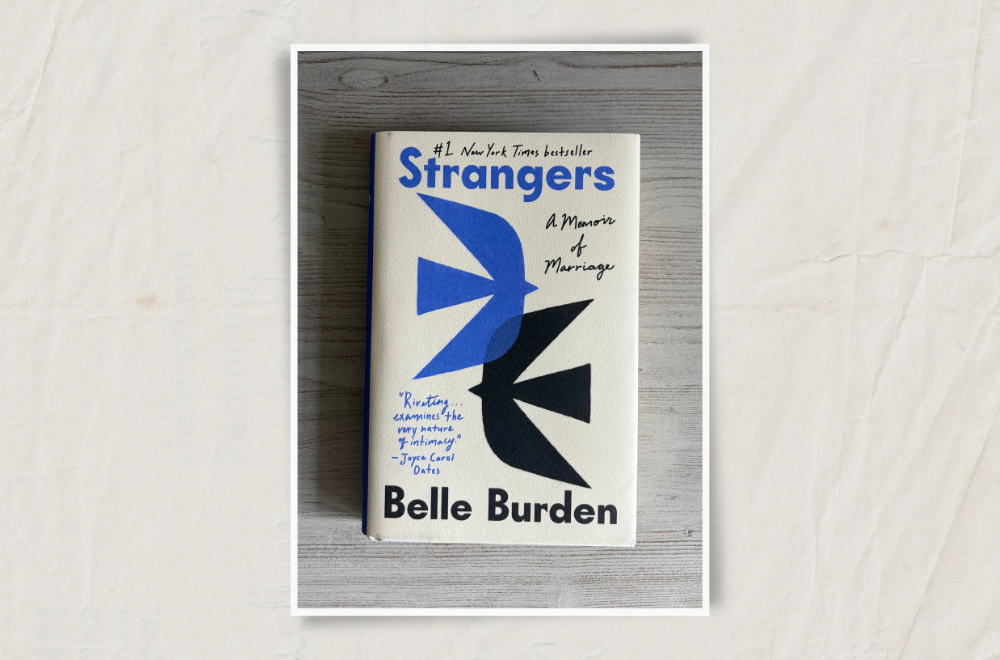
    There’s no denying that Belle Burden has gotten people thinking and talking with this one. Strangers: A Memoir of Marriage is an emotional deep-dive on how Burden’s marriage abruptly ended. She weaves together bits and pieces of her life to try answering what happened and how they got there.

    Personally, I do not find this book worth the hype. I have heard a dozen versions of this story from women at all stages of life (certainly more interesting versions). It’s not a novel situation, but Burden treats it so. It seems to me the main reason this is such a “hit” is because Burden’s family are upper-class New Yorkers. Our society is always obsessed with what these people get up to behind closed doors. And I can only imagine that her connections helped make a splash when the book got published.

    Full review

    What didn’t work

    Burden says she wants to tell her story for women, for her children, to be a cautionary tale. And yes, women should be able to have a voice and share their side of things… but you have to be honest when doing it.

    After closing this book, I wanted to find the original article Burden wrote in The New York Times. Mainly because I was convinced that she didn’t need to expound this story any further than article-length. It was behind a paywall that I didn’t feel like coughing up for. But in my search, I found another article from The New Yorker covering the details left out of Burden’s story. A major theme of her story is around finances, particularly how much Burden stood to lose despite a prenup. But this article makes clear that Burden was never at huge risk, still holding several trusts at the time of the divorce which her husband would have no claim to.

    If you ask me, it really seems like Burden met a man and turned her brain off. She was willing to do anything he wanted, just because he wanted it. They met while she was with someone else; Burden ended it for him. He didn’t like the prenup; she changed it despite lawyers urging her not to. He wanted to buy a place in Martha’s Vineyard; she used her trust to get it for them. On and on and on. The biggest offence to me was that she clearly knew the man had some weird ideas around money from his family. Even knowing that, she let him run the finances, fully handing over management to him. Brain: off.

    I have to share a couple of quotes that made me absolutely stop in my tracks:

    “He made me whiskey sours as the sun set (we believed reports that whiskey would kill the virus)…”

    This was about COVID. Please say sike.

    “When I found James searching the basement, I knew he wouldn’t find the prenup…. I didn’t find it. If I had, I would have burned it.”

    I’m kind of shocked a lawyer allowed this to go out?? But I was slightly cheering for her in that moment.

    “It also forced me to acknowledge how myopic, how grandiose, I’d been about my own story. It wasn’t just recognizing my comparative good fortune (which was enormous); it was seeing the scope of life, of challenge, of suffering, of what human beings endure; it was a zooming out.”

    This was in reference to her pro bono work. I wish she had carried more of this sentiment throughout the rest of the book.

    What did work

    There was one part I found really interesting that I wish we got more of. Hearing the reactions of people to the divorce was so fascinating. Some people were horrible, and some just bizarre. I would’ve liked much more on that instead of reading about memoir writing classes (like ok we got it, you wrote a memoir).

    I honestly am glad to hear about the growth she experienced after their divorce, and how she took back control of her life. If this is the story that gets people to stop giving up that control in the first place, then so be it.

    Disclosure: I am an affiliate of Bookshop.org and I will earn a commission if you click through and make a purchase.
  • The Measure by Nikki Erlick

    The Measure by Nikki Erlick

    No spoiler overview

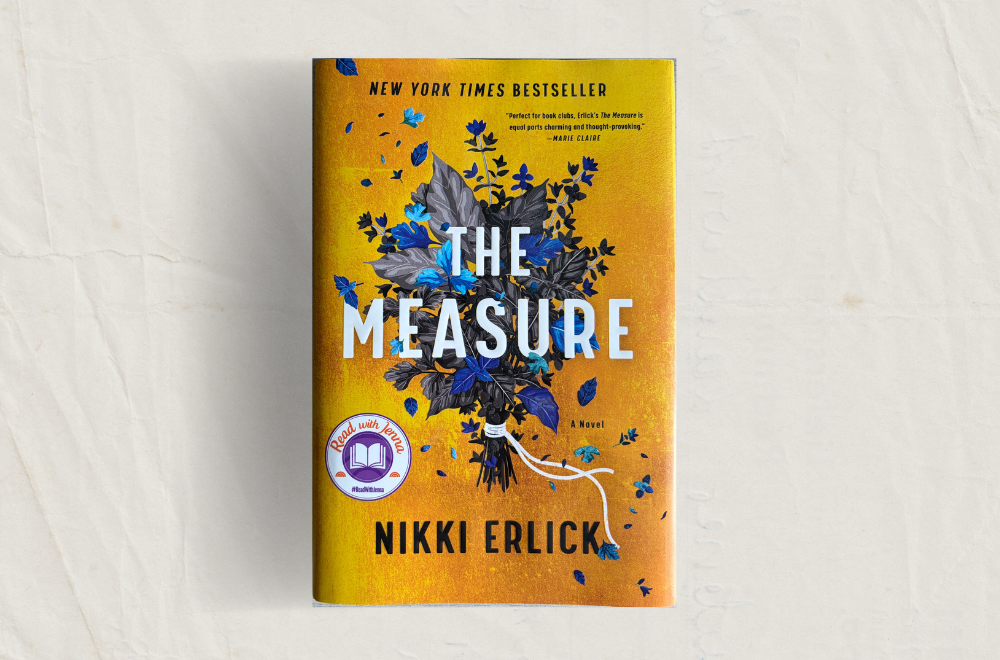
    Overnight, everyone in the world over 22 receives a box. The box tells them, “The measure of your life lies within,” and inside is a string that shows how long they will live. Quickly, society devolves into long-stringers versus short-stringers, and a group who choose not to look at all. We follow several different narrators who have their lives completely changed by this appearance, no matter what camp they fall in.

    The premise of this book is interesting and unique. It feels relevant to what we deal with today, despite it being a completely different situation. It highlights that there are always people who want to make the best of it for everyone, and those who want to make the most of it for themselves.

    While this has a sci-fi angle to it, don’t expect to get any answers about where the strings come from and why. Those details fade into the background quickly; the main focus is on the people and what they do with this new world.

    This is Erlick’s debut novel, and I’m hopeful for more unique ideas from her.

    Full review

    While the premise is differentiated, I didn’t love the execution. There are so many narrators that we follow (I can’t even tell you how many), and it made things hard to keep track of at first. I had to start writing out the characters in the back of the book for myself to keep it straight. Then sometimes, there are random third person chapters thrown in between everything, which completely fall off toward the end. I feel like we could have had a more impactful story with two or three POVs, and a more thoughtful use of the third person zoom-out.

    The writing also overly-explained things, in my opinion. Instead of letting the reader get there, we were told outright what to think about every situation.

    That being said, this book begs reflection on some big questions. Personally, I found myself wondering how religion comes into play.

    • If we all have a pre-set date that we’re set to die, does that mean we also have a pre-set fate? Or do we have free will, within our given time?
    • For what reason would a god would want everyone to know the length of their lifespan?
    • Would you still want to believe in a god in this type of world, where something so big gets dropped one day with no further explanation?

    While it was not my favorite writing, these are the types of reflections that I love from a good story. I have thought about this book and these questions a good amount after finishing it.

    Disclosure: I am an affiliate of Bookshop.org and I will earn a commission if you click through and make a purchase.
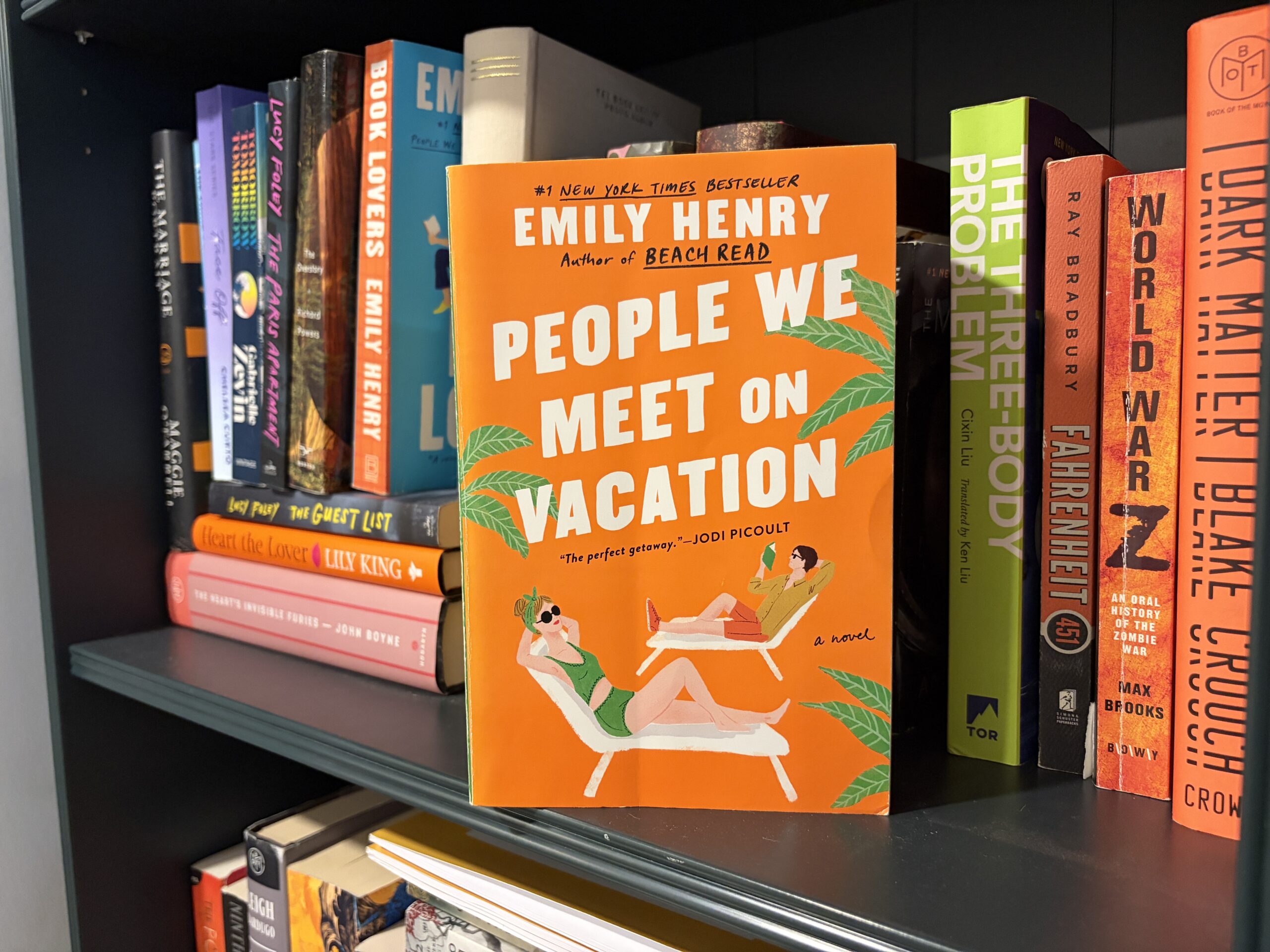
  • Project Hail Mary by Andy Weir

    Project Hail Mary by Andy Weir

    No spoiler overview

    Project Hail Mary is a fun read, despite being about the potential death of the sun and end of all life on our planet. Ryland Grace wakes up as the sole survivor in a spaceship approaching a foreign star with no memory of why he’s there. Eventually, he remembers that he’s on a mission to save the sun (and therefore the Earth), which is dying from an alien parasitic infestation. But, Grace quickly finds out he isn’t the only one trying to find a solution to this problem.

    Having already read The Martian by Weir, I knew that I was going to enjoy Project Hail Mary, as well. Weir has found a balance of humor and action that makes these science-heavy stories accessible. I always enjoy a well-done timeline jump to put the pieces together as we’re reading, and Weir nails it.

    A few people I talked to said they felt like the facts and formulas Ryland was able to toss around made them feel dumb. Yeah, he’s an expert scientist on extraterrestrial life. Of course the average person isn’t going to have the same level of knowledge that he’s supposed to have. Personally, I just skimmed the numbers, because there’s always a summary in plain English that tells you what’s going on.

    Whether it’s humans on Earth or aliens in space, there is a theme of coming together to solve a problem. This is a story about how we’re better working together, no matter where you’re from.

    Full review

    I’m going to say something a bit controversial here. I didn’t love the ending of Project Hail Mary. Take a second, take it in. Let me explain.

    Ryland’s defining trait is that he runs away from the hard things in his life. I cheered Stratt for telling him he’s wasted his potential. He abandoned his field when people disagreed with him, going out in a blaze of infamy rather than stay and methodically prove his point. It’s a small plot point, but he also would rather not have his heart broken, so he doesn’t date. The guy became the foremost expert on Astrophage in the world (which he basically forced himself into, mind you), but refused to put himself out there when it really mattered.

    Of course, there are some ethical concerns about what Stratt did to Grace… But I can’t help but be sympathetic to her. The two expert astronauts who were intended for the mission suddenly die, and the only logical choice is refusing to step up to literally save the world from freezing over. She made it clear that she was doing everything possible to save the world, and Grace’s fear wasn’t going to stop that.

    Given that Ryland’s character flaw is that he’s a coward (his word, not mine), I wanted to see a bit more growth on that area. Was it brave of him to fly back to save Rocky after discovering the Taumoeba could get through xenonite? Yes. Ryland thought going back for Rocky meant he’d run out of food and not make it back to Earth. He had gotten the beetles off to Earth with the info about Taumeoba and Astrophage. Rocky was supposed to be the one delivering this info back to Erid; without Ryland saving him, the whole planet would die. That was the right choice.

    Here’s where I get annoyed. Ryland had many years of not knowing whether everyone on Earth was going to make it. He doesn’t know if the beetles made it back, if the scientists would be able to implement the solution, if any of it worked. The foremost expert in Astrophage and now Taumeoba, the only person in the known-universe who could help them if something had gone wrong in some way, decided to stay on Erid. He had the option to go back to Earth almost immediately after he got to Erid. They made food for him, refueled and fixed his ship. No, he wouldn’t have known what he’d be coming back to or who would still be alive. But he could have been a bigger part of the solution, made new friends. He was willing to die for Rocky and Erid, but not for his friends and family back on Earth.

    Several people have pointed out that people on Earth didn’t really do much for him, forcing him into this mission he didn’t want to join (really that was just Stratt). Meanwhile, Rocky was willing to do anything to help his friend. They see it as Ryland earned time to be with friends and did his part. I get that side of it, and I really do think the friendship of Ryland and Rocky is what made this story resonate. But I can’t imagine going on with my life not knowing if everything on the planet had survived, and knowing it was my responsibility to get the necessary solution back.

    Disclosure: I am an affiliate of Bookshop.org and I will earn a commission if you click through and make a purchase.
  • The Love Hypothesis by Ali Hazelwood

    No spoiler overview

    I wanted to read The Love Hypothesis before the movie came out, and I was in need of something lighter. This was a very cute romance, with lots of comedy. I appreciated that, while in a niche setting, we got just enough context to stay informed without taking us fully away from the story. There was certainly enough to relate to as a woman in a male-dominated industry, so it never felt so far removed from normalcy.

    And can we talk about Lili Reinhart’s TikTik… It’s a masterclass in building buzz. Like, c’mon.

    Full review

    Overall, I liked the story and the cast of characters. Thank goodness for a strong group of friends in a romance, rather than two people in a weird vacuum. Our main character, Olive, could be so awkward it was physically painful at points. But it seemed to do it for Adam, so I guess that’s what really matters.

    I appreciated that there was actual plot substance around the romance, rather than the only focus being on the love story. Romances that strictly focus on the relationship drama feel very unrealistic. The real world involves friends and work and travel and so much more than a romantic interest. I felt like we got a great balance of the real world and the romance in The Love Hypothesis.

    The one area I disliked was the narration. It was supposed to be third person but there were random moments we seemed to jump into Olive’s POV. I’ve already returned my copy to the library, so I don’t have a specific example. But it was like her thought got cut off and she would mentally stutter. Personally, I prefer that type of stream-of-consiousness to come from a first person POV. Since we only followed Olive, it could’ve worked. That being said, I think this might be an instance where I like the movie over the book.

    Disclosure: I am an affiliate of Bookshop.org and I will earn a commission if you click through and make a purchase.
  • Katabasis by RF Kuang

    No spoiler overview

    Katabasis is an incredible exploration of the hero’s journey. I felt like this story was an activity in taking a step back to look at what life is about, and why we go through the messiness of life. Similar to Babel, this book is heavy on allusions. I don’t feel stupid for not knowing them all, but makes me curious to explore more. Classic to Kuang, there are lots of twists and turns to keep a reader on their toes.

    Rebecca Kuang has a knack for writing stories that make you want to learn more and come up with your own hypothesis. While it wasn’t perfectly executed, Katabasis got me thinking, which I always value. Afterwards I reflected on the cost of ambition, the impact of kindness, and the things that really matter in life.

    Full review

    There’s so much to unpack from this book. I think I could reread this several times and still find more. On my first read, one of the major points that stood out to me was the feminism (maybe that should be in quotes). The scene between Alice and the female advisor after she was abused really stuck with me. This advisor claims to be a feminist who paved the way for other women in the field to excel. Instead of doing what she could to help further Alice’s career, she took it as an opportunity to stand on a soapbox. Alice wasn’t in the right with her negative attitude toward this woman either. But how different would things be if she’d helped Alice instead?

    I will say, the romantic angle of this book caught me of guard. Alice and Peter have a very typical rivals-to-lovers arc, but in the weirdest setting (finding love in a hopeless place to the max). The romance didn’t detract from the overall story for me, but it did not feel the most natural. The major breakthrough moment, when Peter is sacrificing himself for Alice, felt like it came out of nowhere. We didn’t get a lot of emotion until that point which would’ve taken the reader along a little more.

    Disclosure: I am an affiliate of Bookshop.org and I will earn a commission if you click through and make a purchase.

  • People We Meet on Vacation by Emily Henry

    People We Meet on Vacation by Emily Henry

    No spoiler overview

    While this has many of the elements that typically make up a good romance, this was not my favorite. I’ve read most Emily Henry books, and I love most of them. People We Meet on Vacation is toward the bottom of the list, though (nothing will top Book Lovers when it comes to Emily Henry for me). I found that there were too many loose ends for a romance, when I want things wrapped up nicely at the end.

    Full review

    Call me old fashioned, but I like for my romance to have a good ol’ external factor keeping the love interests apart. Not sheer stupidity. The miscommunication trope is my least favorite on the face of the earth, and that’s pretty much all this book is. So many of their issues (with each other and themselves) could’ve been resolved by good discussion with friends, family, or therapist. 

    Rachel as a character confused me. At first I was happy we had a friend who was outside of things, who could hopefully help Poppy find clarity. But she didn’t help with anything, other than being a connection to her therapist mother. 

    So what did I like. I will say that Henry built suspense around “the incident” pretty well with the flashbacks. It kept me curious about what had happened, and what was going to happen with our idiots. I also liked that the guy from her high school apologized, helping her realize the story she built up might not be real. And I was glad Poppy apologized to Alex’s ex for all of the stringing along, because that was messed up. I really appreciated the boss recognizing that she needed something different, and helping her find a next step.

    I often read romance as a reminder of joyful things, to get a sense that everything will turn out ok in the end. Unfortunately, People We Meet On Vacation ended unresolved and unsatisfying.

  • Wuthering Heights by Emily Brontë

    Wuthering Heights by Emily Brontë

    Ok yes, I read Wuthering Heights for the first time ahead of the 2026 movie adaptation release. I want to say it’s because I told myself I would read more classics this year. But it’s mainly because I wanted to join in the conversation and know what everyone was talking about. 

    This one took me a while, over two months, to get through (my average time to finish a book is 17 days, according to StoryGraph). A huge part of that is because the characters are just so unlikeable. They’re all so horrible to each other, for seemingly no reason. I’ve always had a hard time reading books when I find the characters unlikeable. I knew there were going to be some gems within this book though, so I pushed through.  

    There’s a lot already being said about the book that I agree with, so I won’t repeat what’s out there. Generally:

    • I don’t think this is a romance. This is a very dark story, with lots of layers (of which romance is one).
    • There’s some stunningly beautiful writing. 
    • Movie Heathcliff should definitely have been a person of color because it changes the whole story. (I still haven’t seen the movie but I’m working on it…)

    I agreed with most of what Brittany Broski had to say about it in her podcast and I’d say it’s worth a listen. Brittany articulates a lot of my feelings about how Emily Brontë fits so much into this story.

    One thing that I keep reflecting on which I haven’t seen a lot about is how Heathcliff and Nellie have so many parallels. They’re both born in the lower class but raised along with the upper class, well educated and with sharp minds. They both seek to manipulate those around them to get their ideal outcome. And they both are harsh judges of those around them. Heathcliff seems to recognize this, and considers Nellie one of the closest people to him. But Nellie is determined to distance herself as much as possible from Heathcliff. 

    Nellie wants to believe she is a good person, but she’s also gotten twisted by external circumstances. She says some really cruel things about the people around her. She’s just as intent on making people do things the way she wants, it’s just that her tactics aren’t as direct as Heathcliff’s. 

    Instead of empathy and reflection on the external circumstances, Nellie believes that Heathcliff is acting wholly from the evil in his heart. Don’t get me wrong, he definitely is not a good person. But he didn’t become this way for no reason. It makes me very sad. The story would have been very different if anyone in this book had shown a little bit of empathy early on. For me, Wuthering Heights is a good reminder that the way we treat those around us can have a bigger impact than we think.

  • Heart the Lover by Lily King

    Heart the Lover by Lily King

    No spoiler overview

    Heart the Lover is a short and quick read, but it packs a punch. A beautiful story that eloquently captures all the little moments that make up big emotions. It follows one woman and her journey to freeing herself in an adult coming-of-age.

    Full review

    King so well captured the duality of college for me. This freedom that you can do whatever you want, become whoever you want while you’re there. But on the flip side, the looming fear of real life and adulthood and responsibilities that impact all your decisions. Casey finds freedom, while Yash sinks deep into the fear. You want their love to be enough to get them through it, but also recognize that they both have a lot of work to do to become themselves. Yash could only ever write in other people’s words, and Casey could not find any words at all. Unfortunately it took a deathbed for them to get through to each other.

    Part I had me nervous for our narrator. She quickly lost herself in these boys, so much so that we only know their nicknames for her most of the book. And then of course there’s the end of Part I. I had to put the book away for a few days before I could work up the courage to keep going. I was so worried that the pregnancy was going to destroy her life, and she’d be pining after Yash the rest of the time. (What does it say that that was my expectation? Pretty sad.) 

    And then, of course, there’s Sam. Can’t say I felt very bad for him in Part I. For a while I thought the first page (“You knew I’d write a book about you someday.”) was about Sam, and I was not excited about that. Their relationship sucked, and he sucked, which makes so much sense when you meet his family and they suck even more. I know he was trying to do his best. I can understand the part of him grappling with his strict religious views in relationships. But it doesn’t excuse his behavior to Casey.

    Even while I say that, I can understand why Yash wasn’t willing to easily let go of Sam’s friendship. Deep down Sam wanted to be a good person, and he had to work through some stuff off-page to get there. I’m glad he got some redemption in the end, that he and Casey resolved things, that he’s still Yash’s friend. 

    I am so incredibly glad Casey went on to have a good life. She wrote, became an acclaimed writer, had her own family, found a love that took all of her. There are still some valleys in her life, but it’s overall good. It hurts that it wasn’t with Yash, but she deserved the life where she can be herself and not just a pet name! And the guy who shows up for her at the airport even when she isn’t expecting it!  

    The end was devastating. Between her son, Jack, and Yash, I would have lost it if I was in her shoes. Thank goodness she did tell Yash about their daughter, that provided some needed closure for the story (and for her, I think).

    I think Yash is going to look after Jack. I think the feeling Casey had while looking at him at the end was Yash, maybe also her mom, letting her know that they’ll protect him.